The Study on CVD Synthetic Diamond from Various Producers
The 7th International Gem & Jewelry Conference (GIT2021)
2–3 February 2022 | Chanthaburi, Thailand
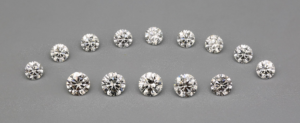
Representative CVD-grown diamond samples (0.1–0.3 ct)
Abstract
In the past decade, laboratory-grown diamonds (LGD) have become commercially available
as gem-grade materials. Among synthetic diamonds, CVD-grown diamonds have gained strong
market presence, especially in melee-size goods. This research evaluates gemological and
spectroscopic properties of CVD diamonds from China, India, and the USA to determine
reliable identification techniques.
1. Introduction
Screening CVD synthetic diamonds is increasingly challenging due to advancing
synthesis technologies. Basic tools commonly used in jewelry stores are insufficient
in many cases. Therefore, systematic testing using multiple analytical techniques is essential.
2. Materials and Methods
- 46 diamond samples (Natural type Ia + CVD from India, China, USA)
- Microwave Plasma CVD (MPCVD) production method
- Basic gemological testing: SG, inclusion, UV fluorescence, CPF
- Advanced analysis: FTIR, DiamondView™, EXA™, Laser Raman spectroscopy
3. Results and Discussion
Gemological Properties
Natural diamonds were inert under UV, while CVD samples showed weak to strong
yellowish-green fluorescence under short-wave UV.
Microscopic Features
Natural diamonds contained mineral inclusions and patchy strain patterns.
CVD diamonds commonly displayed black graphite inclusions, feather-like
fractures, and columnar birefringence patterns.
DiamondView™ Analysis
Natural diamonds displayed deep blue fluorescence. CVD diamonds showed
bluish-green or red fluorescence depending on origin, along with distinctive
straight and curved growth striations.
FTIR Spectroscopy
Natural diamonds were classified as type Ia (aggregated nitrogen).
CVD diamonds showed type IIa characteristics with absence of nitrogen-related absorption.
Photoluminescence (PL)
Natural diamonds showed a peak at 415 nm (N3 center).
CVD diamonds exhibited a strong peak at 737 nm ([Si-V] center),
a key identification marker not present in HPHT diamonds.
4. Melee-Size Findings
Analysis revealed that up to 90% of marketed melee-size parcels claimed as CVD
were actually HPHT synthetic diamonds. Luminescence imaging and PL spectroscopy
were essential in accurate separation.
Conclusion
Basic UV fluorescence alone cannot reliably separate CVD from natural diamonds.
Advanced techniques such as DiamondView™ imaging and photoluminescence spectroscopy
are crucial for accurate identification.
Acknowledgement
This research was supported by the National Research Council of Thailand (NRCT).